Every household has its own version of the same moment. A cup of coffee tips over onto the rug, a muddy paw print appears on the stairs, or a child’s juice finds the one pale cushion in the living room. Full-size carpet cleaners can handle those messes, but dragging one out of storage, filling it, and putting it all away afterward is a lot of effort for a single stain. That gap is why compact, portable deep cleaners exist.
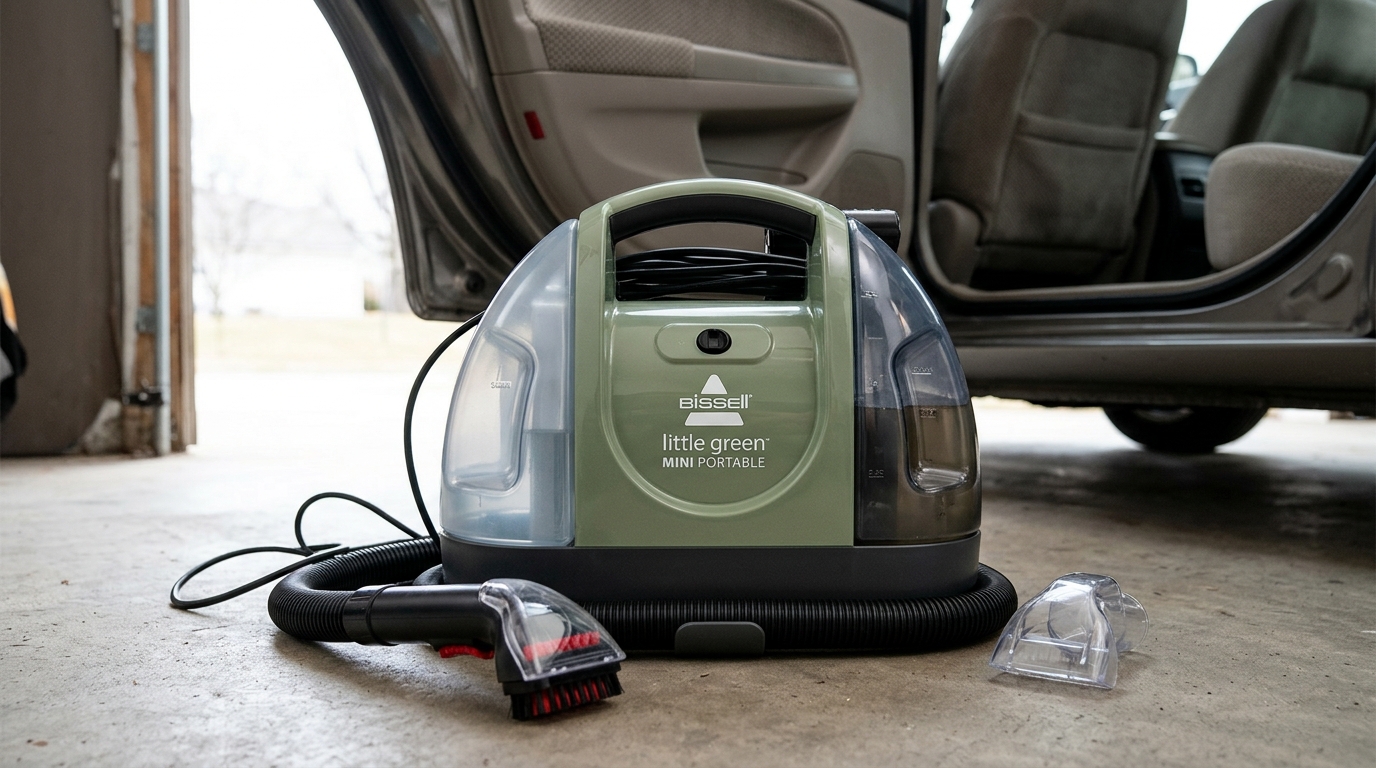
The BISSELL Little Green Mini (model 4075) is a small corded machine built for exactly that kind of job. This guide walks through what it is designed to do, how its features work, where it can be useful, who may find it a reasonable fit, and what to weigh before choosing one. I haven’t used this machine myself, so nothing here is a personal impression. The information comes from the manufacturer’s product page, retailer listings, and general knowledge of how portable spot cleaners behave.
What a Portable Spot Cleaner Is, and Isn’t
It helps to start with the category, because portable cleaners are often confused with full-size carpet machines. A portable spot cleaner uses a small clean-water tank, a cleaning solution, a hand tool, and suction to treat limited areas. You spray a stain with the cleaning mixture, scrub it with the tool, and pull the dirty liquid back out into a separate tank.
That design makes these machines good at specific tasks: stains on carpet, fabric furniture, car seats, pet beds, and stairs. It also sets limits. The tanks are small, so cleaning an entire room’s carpet would mean many refills and a lot of time. These machines are best thought of as targeted tools for particular spots and small surfaces, not as replacements for a large machine used on whole rooms.
An Overview of the Little Green Mini 4075
The Little Green Mini is the compact member of BISSELL’s long-running Little Green family. The manufacturer describes it as its lightest and most compact portable deep cleaner, with a weight of about seven pounds. The 4075 listing in this color is the Tea Green version, which is a cosmetic detail rather than a functional one.
According to BISSELL’s product information and retailer listings, the machine has a 16-ounce clean tank and a dirty tank listed at 13.5 ounces. It includes a 4-inch Tough Stain Tool with a removable lens, a HydroRinse self-cleaning hose tool, and a sample bottle of the brand’s cleaning formula (listed at 8 ounces on one retailer page). It plugs into the wall, with a cord listed at 12 feet in one retailer comparison table, and it has a carry handle.
Different regions and retailers publish somewhat different specifications for similarly named units, so it’s wise to confirm the details on the listing you’re viewing.
Key Features Explained
Compact, Lightweight Build
At roughly seven pounds, the Mini is easy to lift, carry to a car, and tuck into a closet or cabinet. The manufacturer highlights that it can be stored in small spaces. Listings give dimensions in the neighborhood of ten by thirteen and a half inches with a height just over twelve inches, though the exact figures vary slightly between sources.
For apartment dwellers, renters, and anyone short on storage, size can be the deciding factor. A machine that lives in a hall closet is far more likely to be used than one that requires digging through a garage.
16-Ounce Clean Tank
The clean tank holds the water and cleaning solution that gets sprayed onto the surface. Sixteen ounces is modest, which is part of what keeps the machine small. It’s enough for typical spot treatments, such as a single stain, a car seat, or a few stair treads, but you’ll likely refill more often than you would with a larger machine. The dirty tank is slightly smaller, so you’ll also empty it between sessions.
The 4-Inch Tough Stain Tool
The included stain tool is the part that touches the surface. According to the product descriptions, it measures four inches wide and has a removable lens, which lets you see the dirty water being pulled up and also makes it easier to clean the tool afterward. A narrow tool concentrates suction and scrubbing action on a small area, which suits spot cleaning on carpets and fabric.
HydroRinse Self-Cleaning Tool
One of the more common frustrations with portable cleaners is cleaning the machine itself. Hoses and tools can hold residue, and neglected equipment can develop odors. The HydroRinse tool is a hose attachment designed to flush clean water through the hose after use, which is meant to make cleanup quicker. Using it consistently is a good habit for any machine of this type, since leftover residue is a common reason performance drops or smells develop.
Suction
The manufacturer describes strong suction, in the sense of lifting dirty liquid out of the surface it has just treated. Suction matters because the less moisture left behind, the faster the area dries and the less chance there is of lingering dampness. How well any machine extracts moisture depends on the surface, how slowly you move the tool, and how full the tanks are.
Cleaning Formula and Compatibility
Listings mention an included sample of the brand’s Little Green formula. The manual explains which cleaning solutions are recommended and which should be avoided, since using the wrong product can leave residue or affect the machine’s parts. Follow the manufacturer’s instructions on dilution and surface suitability.
Surfaces and Uses
BISSELL’s product page lists carpet and rugs, low-pile carpet, stairs, area rugs, pet beds, auto and garage areas, spot and stain treatments, and upholstery and fabric among the intended surfaces. Retail descriptions also mention car interiors. As with any such machine, it’s smart to check the care label on fabrics and test a hidden area first.
Carry Handle and Corded Power
A built-in handle makes the machine easy to move from room to room or out to a vehicle. Because it is corded, you won’t need to worry about a battery running down, though the cord length limits how far you can work from an outlet. A 12-foot cord, as one listing indicates, is workable for most room corners, but a car interior might require an extension cord or a vehicle parked near an outlet.
How It Can Be Used
The best way to understand a spot cleaner is to picture the situations where it tends to be considered.
Fresh spills on carpet and rugs. Coffee, juice, and food drops are the classic use case. A compact machine that’s ready to go makes it easier to deal with spills soon after they happen, which generally gives better results than waiting.
Stairs. Stair carpet gets heavy foot traffic and is awkward to clean with a large machine. A small unit with a handheld tool is easier to manage on steps, and the lightweight body helps when you need to move it up and down a few at a time.
Upholstered furniture. Sofas, armchairs, dining chair seats, and ottomans can collect spots and marks. A portable cleaner with a small tool can treat these surfaces, provided the fabric is rated to handle water-based cleaning. Many upholstery tags carry codes that indicate what’s safe, so check yours before you start.
Pet-related messes. Pet beds, areas near doors where paws track in dirt, and accidents on carpet are common reasons people look at portable cleaners. The product line is promoted around pet households, and the brand ties purchases to its pet foundation. Cleaning performance on pet stains and odors depends on how quickly you act, the type of mess, and the surface.
Car interiors. Seats, floor mats, and cargo areas are frequent targets. The compact size makes it practical to carry to a driveway, though the corded power means you’ll need access to an outlet.
Rental and move-out touch-ups. People preparing a rental for inspection often need to treat a few scuffs and stains rather than clean every inch of carpet. A small cleaner is a more practical tool for that than a full machine.
Mattresses and soft furnishings. Some people use portable cleaners on mattresses and similar items. Check the manual and the manufacturer’s guidance first, since it’s important not to over-wet these surfaces.
Seasonal refreshes. Spring cleaning or pre-guest preparation often involves touching up a handful of high-visibility spots, which suits a compact machine.
Who It May Be Suitable For
This type of machine tends to fit people who:
- Live in smaller homes or apartments and don’t have space for a full-size carpet cleaner
- Have pets or young children and deal with frequent small accidents
- Want a second machine for stains, stairs, and furniture alongside a larger cleaner
- Own a car and want to treat seats or mats without a trip to a detailer
- Rent their home and need to treat isolated stains rather than whole rooms
- Prefer quick setup, since a small machine can be ready in a few minutes
It may be less ideal for:
- Whole-room or whole-house carpet cleaning, where the small tanks mean constant refilling
- Large, heavily soiled areas, where a full-size machine would be more efficient
- Anyone looking for a cordless machine, since this model plugs in
- Delicate fabrics and antiques that shouldn’t be exposed to water-based cleaning
- People expecting deep restoration of old, set-in stains, since results on aged stains vary widely and no spot cleaner can promise to remove everything
Important Things to Consider
Tank Size and Refills
With a 16-ounce clean tank and a smaller dirty tank, you’ll refill and empty frequently on larger jobs. For a single stain that’s no problem, but it adds up quickly on bigger areas.
Not a Replacement for a Full-Size Machine
If your main goal is to clean large expanses of carpet, a portable spot cleaner will feel slow. Think of it as a complement, not a substitute.
Cord Length
A listed cord of about 12 feet gives reasonable reach, but you may need to move between outlets or use an extension cord for some jobs. Check that your layout suits it.
Drying Time
Even with good suction, cleaned areas stay damp for a while. Good ventilation, a fan, or an open window can help. Avoid walking on damp carpet with dirty shoes, and keep pets and children away until the surface is dry.
Fabric and Colorfastness
Water-based cleaning can cause some fabrics to shrink, bleed, or leave water marks. Check care labels, follow the manufacturer’s directions, and test the cleaner on a hidden area first.
Cleaning Solution Choices
Using a cleaning solution that isn’t recommended for the machine can cause residue or damage. The manual lists suitable options. Also remember that some solutions have their own safety instructions, so read the label.
Maintenance
After each use, empty and rinse the tanks, clear the tool, and use the HydroRinse tool as directed so the hose doesn’t hold onto residue. Let parts dry before storing the machine. Skipping these steps is one of the most common reasons portable cleaners develop odors or lose performance.
Noise
Suction machines can be loud, even small ones. Regional manufacturer listings for similar units mention noise ratings, but figures vary between versions, so check the manual for your model if sound is a concern.
Warranty and Regional Differences
Warranty terms, included accessories, and even some specifications can differ by country and retailer. Read the terms on the listing you’re considering.
Realistic Expectations
Spot cleaners work best on fresh or moderately set messes. Old, deeply embedded, or chemically set stains may only lighten. Results depend on the stain, the surface, how it’s treated, and how quickly you act.
Comparing General Categories of Cleaning Tools
Instead of comparing brands, it helps to compare categories and what each is good at.
Compact Corded Portable Cleaner (This Category)
Strengths: light, easy to store, quick to set up, handy for stains, stairs, upholstery, and car interiors.
Considerations: small tanks, cord reach, limited for large areas.
Cordless Portable Cleaner
Strengths: freedom from outlets, convenient for cars and awkward spaces.
Considerations: battery runtime limits and recharge time, and batteries age over time.
Full-Size Carpet Cleaner
Strengths: large tanks, wide cleaning paths, well suited to entire rooms.
Considerations: bulky, heavier, takes longer to set up and store.
Hand Scrubbing with Cloths and Brushes
Strengths: no equipment needed, good for very small or very fresh spills.
Considerations: more physical effort, and it can be harder to remove moisture and residue from deep in the fibers.
Professional Cleaning Services
Strengths: powerful equipment and experience with difficult jobs.
Considerations: scheduling and cost, and usually not practical for every small spill.
Many households use a combination: quick blotting for fresh spills, a portable cleaner for stains and small areas, and a larger machine or professional service for periodic whole-room cleaning.
Practical Tips for Spot Cleaning Safely and Effectively
These are general habits that apply to most portable cleaners, not claims about this specific model.
- Act quickly. Blot fresh spills with a clean cloth before they dry, rubbing as little as possible.
- Vacuum first. Removing loose dirt and hair before wet cleaning keeps debris from turning into mud.
- Check the care label. Fabrics have different tolerances for water and cleaning solutions.
- Test a hidden spot. Try the cleaner on an area that won’t be seen to check for color change.
- Use the recommended solution and dilution. More isn’t better, and extra soap can leave residue that attracts dirt.
- Work in small sections. Move the tool slowly and make several passes, especially on the extraction pass.
- Don’t over-wet. Excess moisture can soak into padding or foam and take a long time to dry.
- Ventilate. Open windows or use a fan to speed drying.
- Rinse the tanks and hose after every use. The HydroRinse tool is designed to help with this.
- Store the machine dry. Leave tanks open or ajar so they can air out.
Frequently Asked Questions
Is the Little Green Mini corded or cordless?
It’s a corded electric model. Retail listings give the cord length as around 12 feet, though you should confirm on the page you’re viewing.
How much does it weigh?
The manufacturer lists it at about seven pounds, which it describes as the lightest in its Little Green line.
How big are the tanks?
The clean tank is listed at 16 ounces, and one manufacturer page lists the dirty tank at 13.5 ounces.
What comes in the box?
Product descriptions mention the machine, a 4-inch Tough Stain Tool with a removable lens, a HydroRinse self-cleaning hose tool, and a sample of the brand’s cleaning formula. Contents can vary by region and seller, so check the listing.
What is the HydroRinse tool for?
It’s a hose attachment designed to flush clean water through the hose after use, which helps with cleanup and reduces the chance of leftover residue.
Can it be used on car interiors?
Retail and manufacturer descriptions list auto interiors among the intended uses. Because the machine is corded, you’ll need access to an outlet.
Is it suitable for pet messes?
Listings describe it as useful for pet-related stains and pet bedding. Results depend on how fresh the mess is and the surface involved, and prompt cleanup generally helps.
Can I use it on upholstery?
It’s designed for upholstery and fabric surfaces, but you should check the furniture’s care label and test a hidden area first, since some fabrics are sensitive to water.
Will it clean an entire room of carpet?
It’s technically possible, but the small tanks make it slow and inefficient for large areas. It’s better suited to spot cleaning, stairs, and small surfaces.
How should I clean the machine afterward?
Empty and rinse both tanks, run the HydroRinse tool as directed in the manual, wipe the tool, and let everything dry before storing it.
Do I have to use the brand’s cleaning solution?
The manual explains which solutions are recommended. Using an unsuitable product can leave residue or affect the machine, so follow the manufacturer’s guidance.
How long does carpet take to dry?
Drying time depends on how wet the area is, the thickness of the carpet and padding, and the room’s ventilation. Good airflow helps, and it’s best to wait until the surface is fully dry before heavy use.
Does the warranty differ by region?
It can. Warranty terms and some specifications vary between countries and retailers, so read the terms on your listing.
Setting Realistic Expectations
Product descriptions tend to emphasize what a cleaner can do and say less about where it reaches its limits. A fair reading of the Little Green Mini’s features is that it’s designed to make small cleaning jobs easier: it’s light, it stores compactly, and it comes with tools aimed at stains and upholstery. It isn’t trying to replace a full-size machine, and it won’t magically remove every stain from every surface.
If you can, compare a few portable cleaners’ spec pages, read the manual (BISSELL and most manufacturers post them online), and look for independent testing that explains how results were measured. Those details tend to be more informative than a headline claim or a star rating.
Conclusion
The BISSELL Little Green Mini Portable Carpet Cleaner (4075) is built around a simple idea: bring the spot-cleaning abilities of a larger deep cleaner into a smaller, lighter, easier-to-store package. A seven-pound body, a 16-ounce clean tank, a 4-inch Tough Stain Tool, and a HydroRinse tool for cleanup cover the basics of dealing with spills, upholstery marks, stairs, and car interiors.
Its limits are as clear as its strengths. The small tanks, the corded power, and the focus on spot cleaning mean it works best as a targeted tool rather than a whole-house solution. Considering your space, your surfaces, and the kinds of messes you actually deal with will tell you more than any specification list.
If you’d like to look at current specifications, included accessories, and availability, you can check more details on Amazon here.
As an Amazon Associate, I may earn from qualifying purchases made through links on this page, at no extra cost to you.